


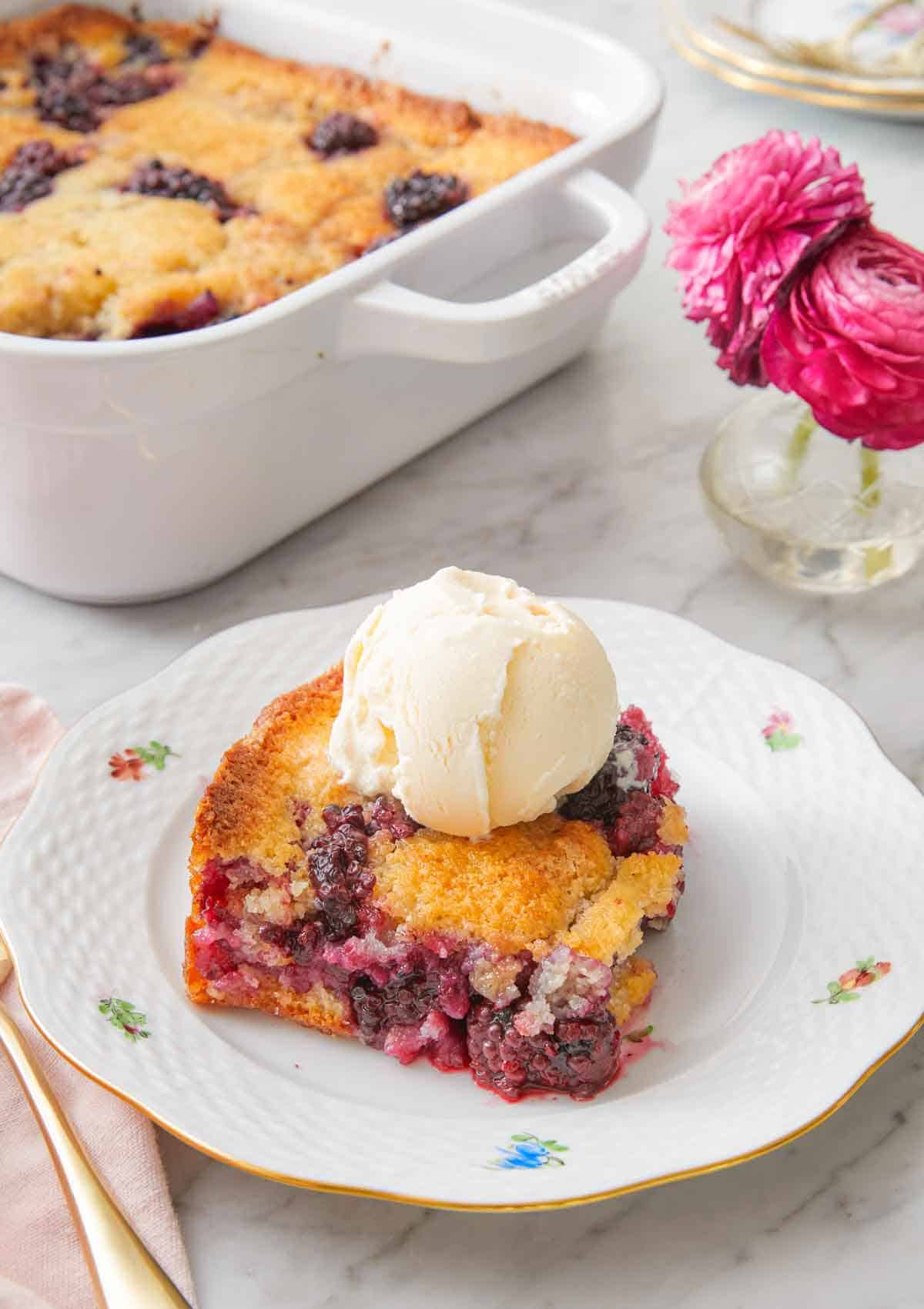
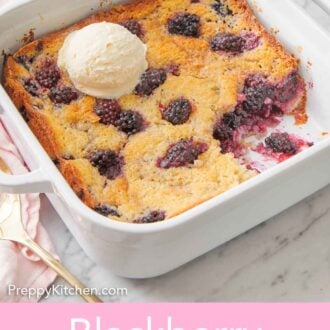
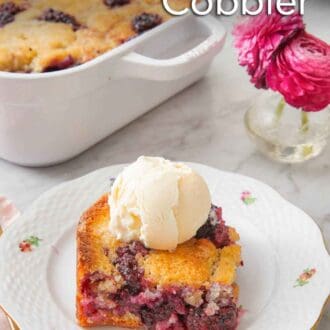
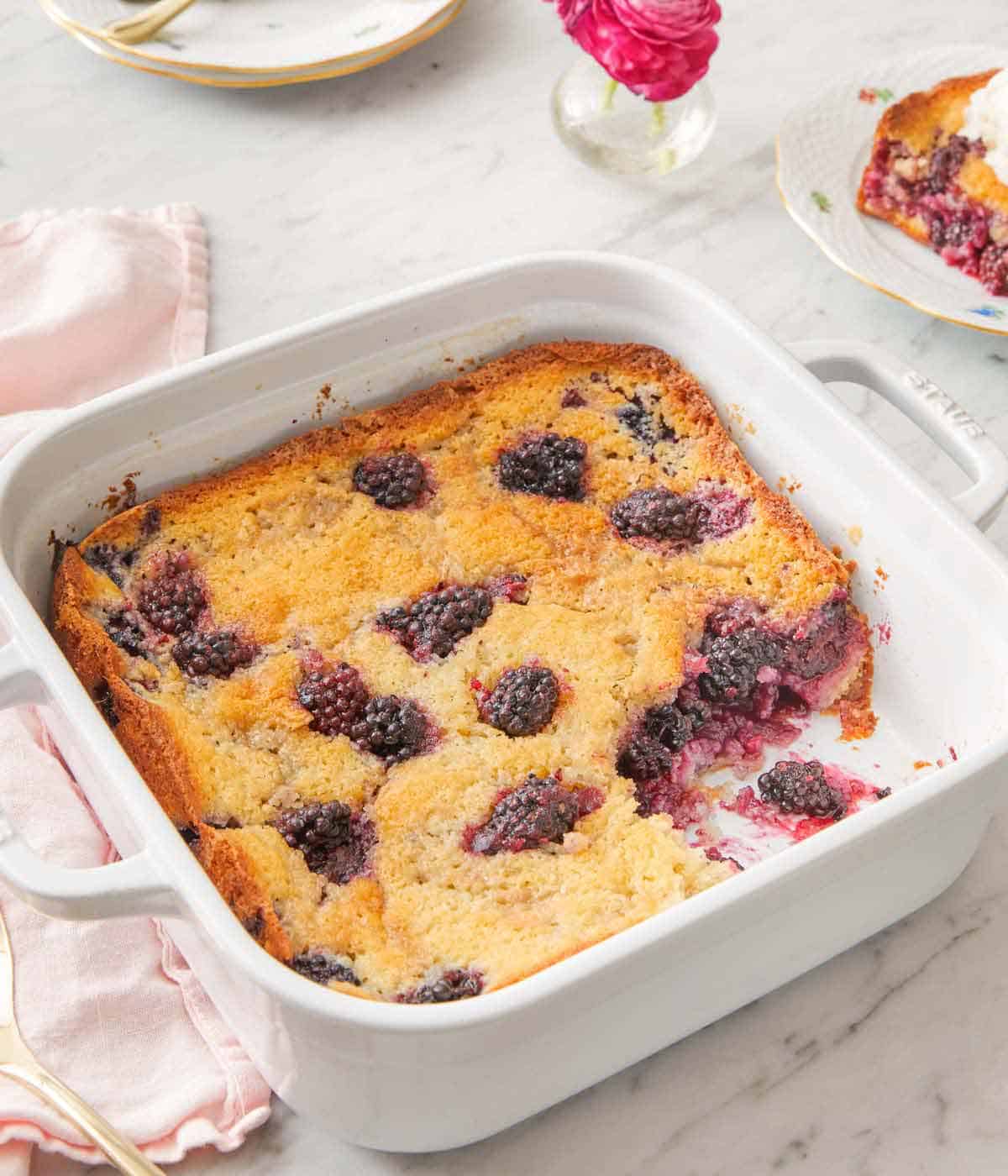
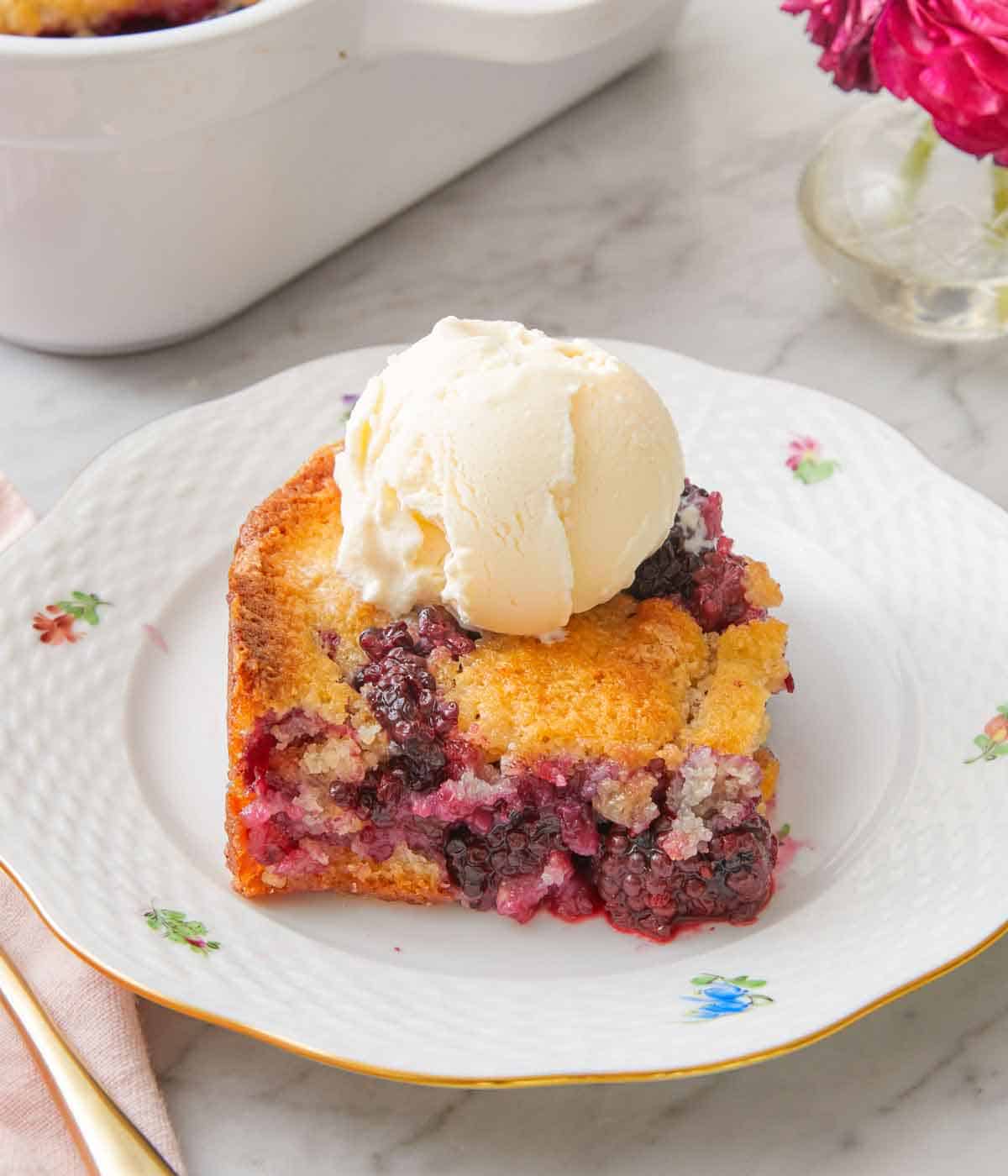
This blackberry cobbler is the recipe I reach for the second juicy blackberries show up at the market. There’s no biscuit dough to cut in, no pie crust to roll—you simply stir a buttery batter together in one bowl, pour it into a dish, scatter sugared berries over the top, and the oven does the rest. As it bakes, the batter climbs up and around the fruit and sets into a golden, tender-crumbed crust with jammy berries all through it.
It’s the style of cobbler a lot of people grew up calling a “dump cobbler” or a “batter cobbler,” and it’s the same technique behind my strawberry cobbler and peach cobbler recipes. The batter is cake-like with crisp edges and a fluffy center. And once you know how to make this batter and why it works, you can use this same method with almost any fruit.
A reader, Sarah, says: “This cobbler was delicious. I used brown sugar in the batter and it turned out so good. The leftovers the next day had an intense caramel flavor. I will definitely make it again!” ★★★★★
Table of Contents
What Makes This Cobbler Work
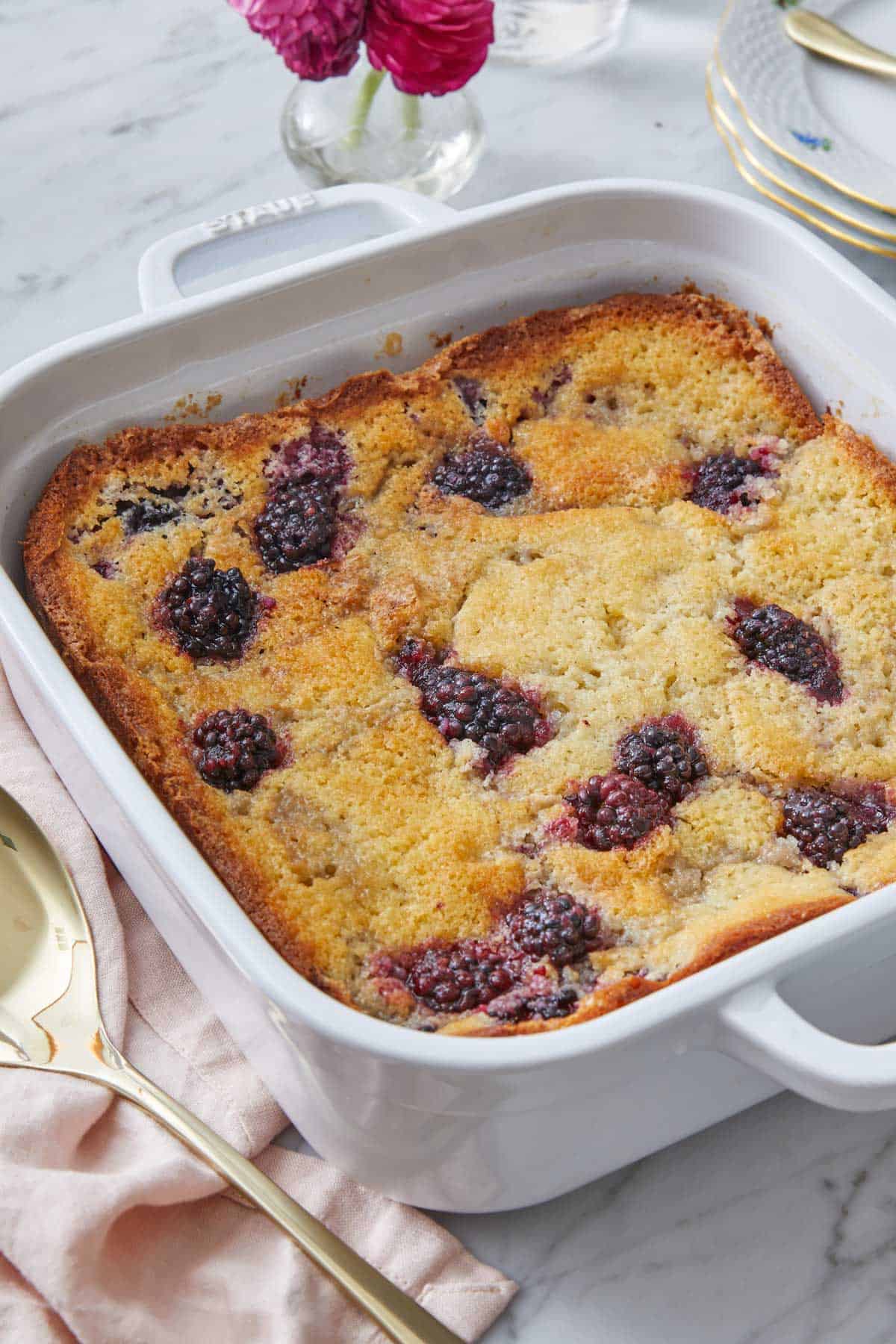
Cobblers are thought to be named for their cobblestone-like top that develops when the batter rises up and around the fruit, creating an uneven top. To get the right texture and look, you don’t stir the berries into the batter. You pour the batter in first, then scatter the sugared berries on top and leave them there. As the cobbler bakes, the batter rises up through and around the fruit. Some of the fruit sinks all the way to the bottom, and some of the berries end up suspended in a tender, cake-like crust instead.
The self-rising flour is what causes the batter to get that proper lift (it has baking powder already built in). Don’t swap it for plain all-purpose without adding leavening (more on that below!).
The first few times I made batter cobblers, I stirred everything together, the way you would a muffin batter, and ended up with more of a sliceable cake than a true cobbler. Separation is the trick for the right consistency—plus it makes the process even easier!
Key Ingredients
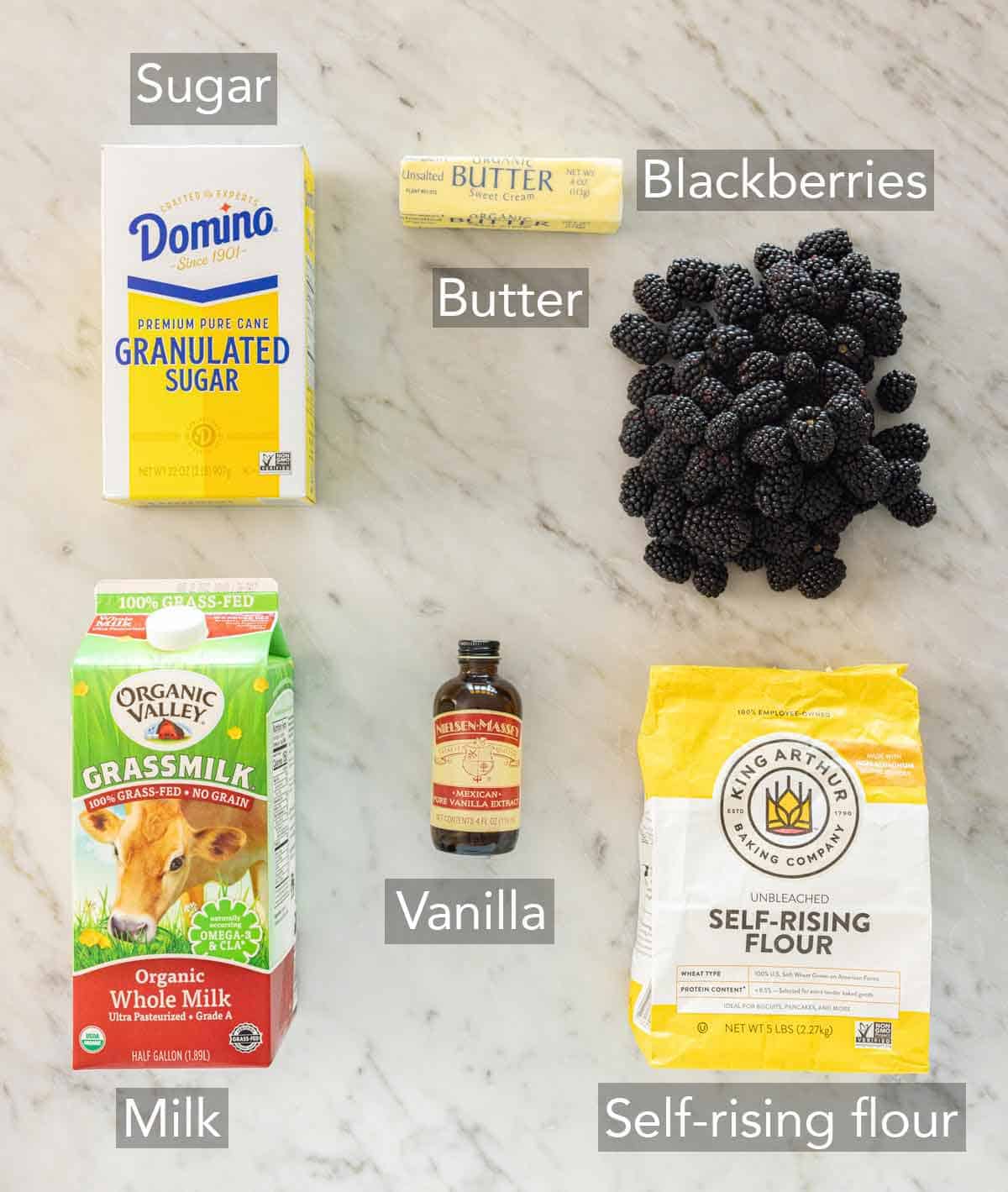
These are the main ingredients you need to make this easy blackberry cobbler. You can find the full list of ingredients and measurements in the recipe card below.
Granulated sugar — sweetens the batter and makes the berries jammy. I use plain white sugar for a clean sweetness that lets the blackberries shine; cane sugar or a little brown sugar in the mix adds a faint caramel note if you want it.
Self-rising flour — this is the key to getting the cobbler batter to bake properly. It contains baking powder and salt, which make the batter rise through the fruit. No self-rising flour on hand? Whisk together 1½ cups (180g) all-purpose flour with 2¼ teaspoons baking powder and ½ teaspoon salt. If you simply replace it with all-purpose flour, your batter won’t rise at all, and your cobbler will turn out very dense, gummy, and frankly, not delicious. Be sure to add the baking powder!
Whole milk — this is the main moisture for the batter, and the fat in the milk helps make a tender crumb. 2% or buttermilk will work, but skip fat-free, which leaves the crust thin and a little tough.
Vanilla extract — rounds out the batter. Use a good-quality pure extract or homemade vanilla extract. You can also use vanilla bean paste for flecks of vanilla throughout the batter.
Unsalted butter — melted and stirred into the batter for richness and a golden brown, faintly crisp edge. Unsalted butter keeps the cobbler from being too salty, since self-rising flour already contains salt. To learn more about why you should use unsalted butter check out my article Academy: Salted vs Unsalted Butter.
Blackberries — these are the stars of the dish! Fresh, ripe berries are best when they are in season. Look for plump, deep-black fruit without red shoulders, which stay tart. Frozen blackberries work the rest of the year (more on that below).
Fresh vs. Frozen Blackberries
Fresh berries in peak summer give the brightest flavor and best texture, but frozen blackberries work year-round and are often the better buy off-season. Two rules with frozen: don’t thaw them, and expect a little more bake time. Add them straight from the freezer, as thawed berries turn very juicy, and that extra liquid will turn a cobbler runny and the crust gummy. Frozen fruit is also colder, so give the cobbler an extra 5 to 10 minutes in the oven and judge by the bubbling juices, not the clock.
Pan Size Variations
An 8-inch square dish (or anything with an 8-cup, 2-quart capacity) gives the cobbler enough depth to rise without overflowing. To feed a crowd, double everything and bake it in a 9×13-inch pan (about 3½-quart capacity) and add 5 to 10 minutes of baking time. A 9-inch square pan will spread the batter out more, making the cobbler much thinner. It can work, by reducing the bake time by about 15 minutes, but you won’t get quite the same fluffy texture.
For pan materials, a glass or ceramic baking dish will bake up with softer edges and a jammier bottom. A metal dish will get the edges crispier and the bottom a bit hotter, so it may brown more. Both work just fine for this recipe!
How To Make Blackberry Cobbler
Below, I’ve highlighted portions of the recipe in step-by-step process images along with instructions for making homemade blackberry cobbler. You can find the full set of instructions in the recipe card below.
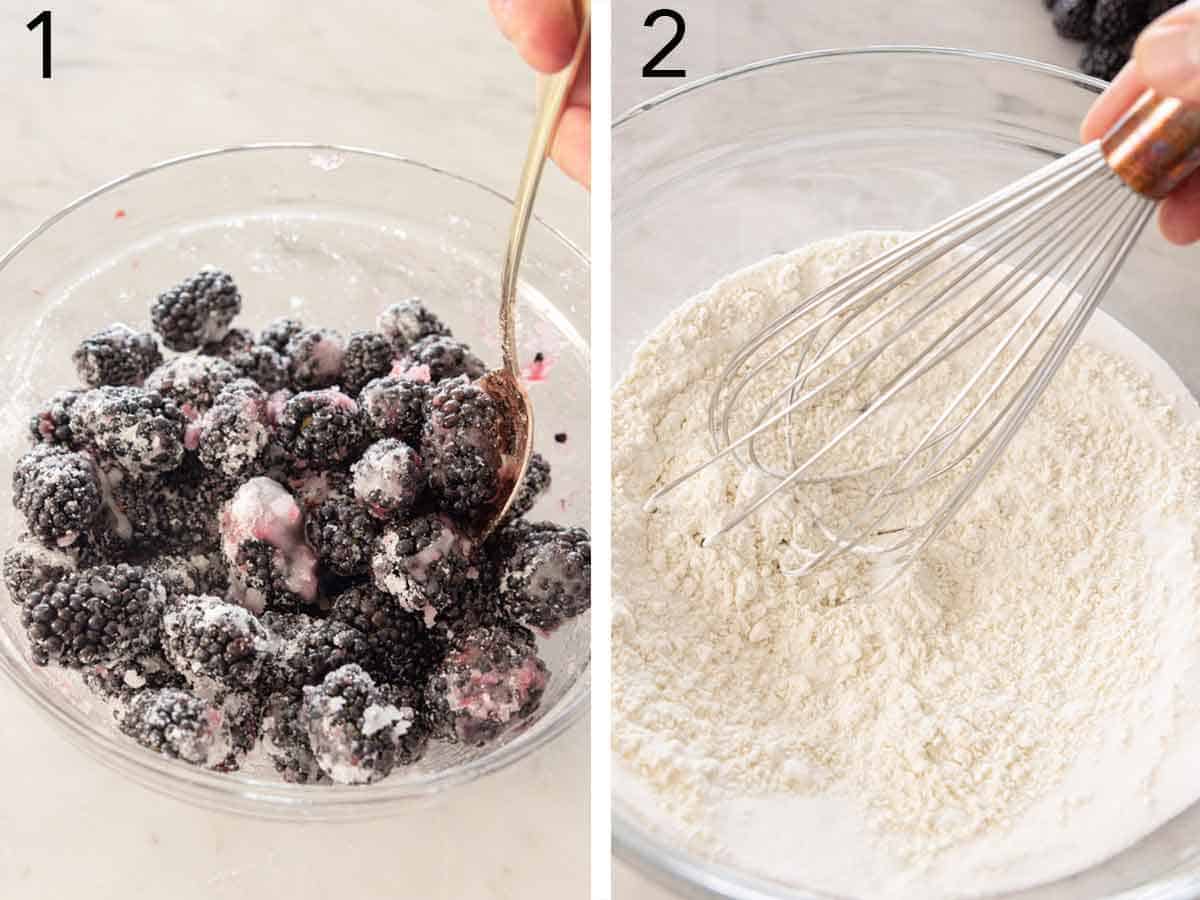
1. Heat the oven and sugar the berries. Preheat the oven to 350°F and lightly grease an 8-inch square baking dish. Toss the blackberries with some of the sugar and set them aside. The sugar coating pulls out a little juice, so they bake jammy rather than dry.
2. Make the batter. Whisk together the rest of the sugar and the self-rising flour. Add in the milk and vanilla, then the melted butter, and stir together, mixing just until smooth.
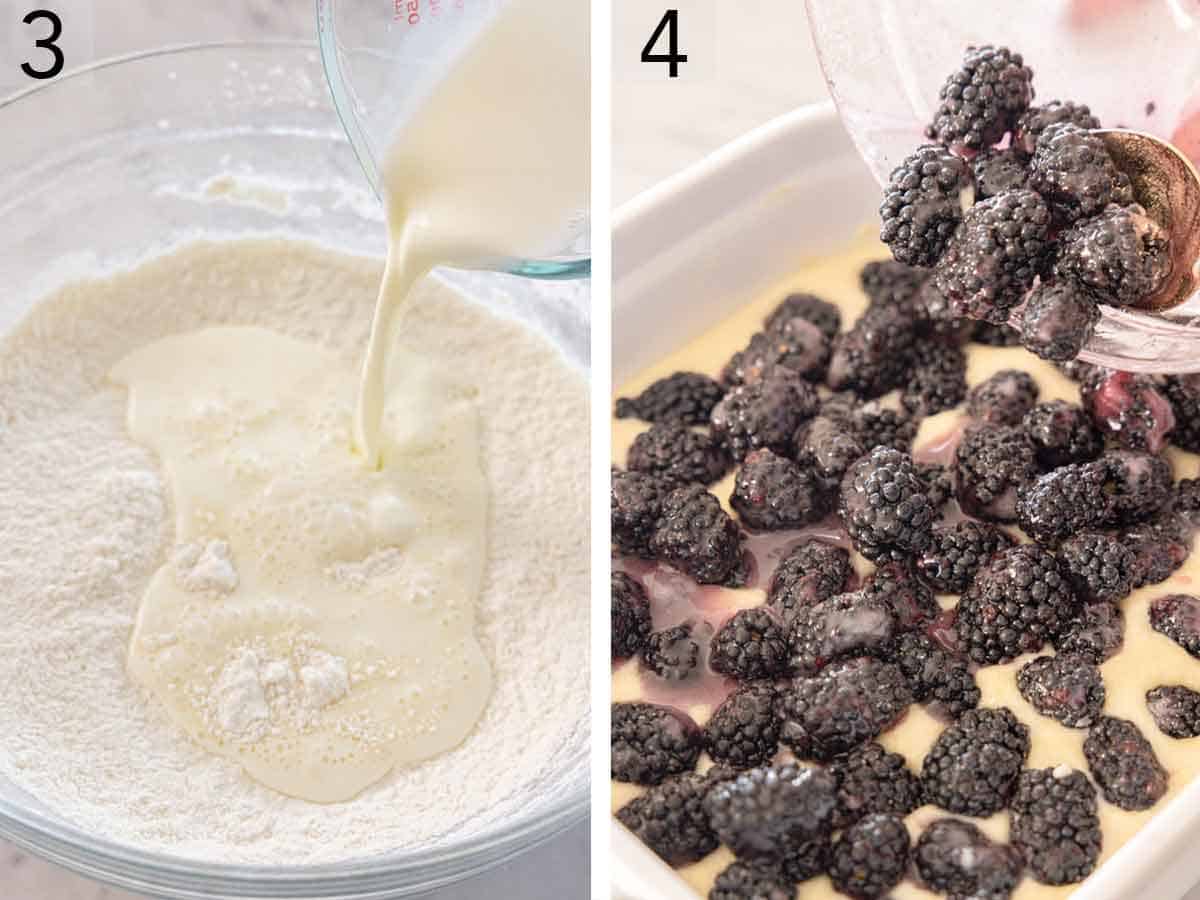
3. Layer, don’t mix. Spread the batter evenly across the bottom of the dish. Scatter the sugared berries over the top of the batter. (Don’t stir them in.)
4. Bake and rest. Bake for about 1 hour, or until the top of the batter is golden and the fruit juices bubble at the edges. Let the cobbler cool for at least 10 minutes so the juices thicken before serving. Cobbler is best warm, with vanilla ice cream or whipped cream!
Pro Tips For Making This Recipe
Taste a berry first. Blackberry sweetness swings a lot by season and source. If yours are tart, nudge the sugar on the berries up by a tablespoon or two; if they’re very sweet, hold back a couple of tablespoons or add a squeeze of lemon instead.
Add lemon for balance. A teaspoon of lemon zest and a tablespoon of juice tossed with the berries brightens the whole dish and keeps a sweet batter from going one-note. This is my trick when I have very sweet berries, or if you prefer a little zing in your desserts.
Measure the flour properly. Adding too much flour will make the cobbler batter dry. Adding too little will make it runny and bake up gummy or dense. Use a scale if you have one, or learn how to measure volume accurately with the spoon and level method in my guide on Academy: How To Measure Ingredients Correctly.
Spread the batter evenly. A level layer means even rising and a crust that bakes at the same rate, corner to corner.
Finish with coarse sugar if you’d like. A sprinkle of turbinado before baking adds a crackly, sparkling top. This is delicious, but optional!
Blackberry Cobbler
Equipment
- Mixing Bowls
- 8″ baking dish
Ingredients
- 1½ cups granulated sugar (300g)
- 1½ cups self-rising flour (180g)
- 1 cup whole milk (240ml)
- 2 teaspoons vanilla extract
- ½ cup melted butter (120ml)
- 3 cups fresh blackberries or frozen blackberries (510g)
Instructions
- Preheat the oven to 350F. Grease an 8-inch square baking dish.
- In a large mixing bowl, whisk together 1 cup of sugar, and the flour stir in the whole milk and vanilla. Add the butter and stir until well combined. Spread the batter into the bottom of the greased baking dish.
- In a medium mixing bowl, toss the blackberries with the remaining ½ cup of sugar. Scatter the sugared berries over the top of the batter.
- Bake for 1 hour or until golden brown and bubbling. Let cool for at least 10 minutes before serving. Best served warm with whipped cream or vanilla ice cream.
Notes
- Reserve a few berries for the top. If you want to see more blackberries poke through at the top of the cobbler, save about ¼ cup of the sugared berries. Scatter them on top after 40 minutes of baking.
- Let the baked cobbler rest before serving. Allow the cobbler to cool for at least 10 minutes before serving. This gives the juices time to thicken for the best serving texture. Cobbler is best served warm, though, so don’t let it cool for too long! You can also reheat leftovers in the oven until warmed through.
Nutrition
How to Store and Reheat
Cool the cobbler completely, then cover it or transfer it to an airtight container and refrigerate for up to 4 to 5 days. Warm leftovers in a 350°F oven until heated through to bring back the crust; the microwave works in a pinch, but softens the top.
To freeze, wrap the cooled, baked cobbler well or transfer individual servings to freezer containers, and freeze for up to 3 months. Thaw for a few hours in the fridge, then reheat at 350°F for 20 to 25 minutes. I freeze it baked rather than raw, since the leavening in the batter works best going into a hot oven fresh.
Frequently Asked Questions
Usually, it’s too much liquid or not enough oven time. Thawed frozen berries release water, so always bake them from frozen, and make sure they bake for long enough. The juices should be bubbling before you pull it, and let it rest 10 to 15 minutes so the juices thicken.
Yes. Either assemble it unbaked, cover, and refrigerate up to 4 hours (let it sit at room temperature 20 minutes before baking so the dish isn’t ice-cold), or bake it fully, refrigerate up to 3 days, and reheat in a 350°F oven before serving. Cobbler is best freshly baked, though, so try to bake it just before serving if you can!
Absolutely! This batter works exactly as written with blueberries, raspberries, or a mixed-berry blend. For other fruit families, my strawberry cobbler and peach cobbler recipes are developed specifically for that fruit since the fruits are a bit juicier.
Self-rising flour is convenient, but you can substitute it. You cannot use straight all-purpose flour in its place, though. Mix together 1½ cups of all-purpose flour, 2¼ teaspoons baking powder, and ½ teaspoon salt to replace the self-rising flour in this recipe.
More Recipes To Try
Try one of these other dessert recipes featuring summer fruits:
- Cherry Cobbler — the same one-bowl batter method with juicy summer cherries baked up through a golden crust.
- Peach Crisp — a Southern classic with spiced peaches and a crispy streusel top, perfect with ice cream.
- Blueberry Cobbler — sweet-tart blueberries under the same buttery batter crust, ready in about an hour.
- Berry Crisp — mixed berries under a crunchy oat and butter topping, for when you want a crispy element instead of cake.
- Blackberry Cake — a tender layered cake studded with fresh blackberries, perfect for summer celebrations.
If you’ve tried this blackberry cobbler recipe, then don’t forget to rate it and let me know how you got on in the comments below. I love hearing from you!
Sarah Neill says
This cobbler was delicious. I used brown sugar in the batter and it turned out so good. The leftovers the next day had intense caramel flavor. I will definitely make it again!
Jodashde says
John, another amazing recipe from Preppy Kitchen. YIPPEE! Just pure perfection! I had some local peaches, local blackberries, and some blueberries I had to use up and this was such a great way to celebrate the last days of these delicious fruits. A little almond amaretto ice cream topped it off!
Lupita says
Awesome!
Sandra Whitman says
My family has made this for years but we use the equal amounts of sugar, self rising flour, and milk. We also heat the berries. We melt the butter in the oven in the 9x 13 dish, pour the batter on top, and the hot berries on top of that. Then bake. The batter rises to the top and makes the most luscious filling, dipped with a spoon instead of cutting with a knife. We also have used peaches or strawberries in this recipe. I may have to try this for something a little different. 😊